

About
Introducing the KAIST Graduate School
of Engineering Biology
People
Meet the community of the KAIST Graduate School
of Engineering Biology
Research
Exploring the Future of Engineering Biology
Education
Innovative Education for the Next Generation
of Engineering Biologists
Online Lectures
Explore the Online Learning Resources of the
KAIST Graduate School of Engineering Biology
Admissions
Your Gateway to the KAIST Graduate School
of Engineering Biology
News & Announcements
Stay Updated with the Latest from the
KAIST Graduate School of Engineering Biology

SITE MAP


Research KAIST Graduate School of Engineering Biology
International Collaboration
Major Milestones
The KAIST Graduate School of Engineering Biology is building a global research and innovation network with leading institutions and companies worldwide.
Through strategic partnerships across North America, Europe, and Asia, KAIST drives collaborative research at the forefront of synthetic biology and advanced biotechnology.
Joint Global
Research Initiatives
-
Korea-US Collaborative Research Fund
Joint research with top-tier institutions in North America to strengthen transnational collaboration in Engineering Biology.
-
Global Capacity-Building Program in Advanced Biotechnology
A multi-institutional program connecting research centers across the U.S., U.K., and Japan to expand Korea’s global competitiveness in biotechnology.
-
Korea–U.K. Global Research Center for Advanced Biotechnology
New five-year collaborative project established on the foundation of the bilateral Focal Point Program between Korea and the U.K.
-
Korea–EU Global Research Center for Advanced Biotechnology
Joint initiatives with Denmark, expanding upon a 13-year partnership in biotechnology research and innovation.
Global Expansion

-
4th Global Biofoundry Alliance (GBA) Meeting in Daejeon
Hosting the world’s largest assembly of 35 national biofoundries, marking KAIST’s emergence as a global hub for biofoundry-driven research.
-
Korea–U.S. Synthetic Biology Conference
Annual joint symposium co-organized with U.S. partners since 2022, fostering academic exchange and research collaboration.
-
Asian Synthetic Biology Association (ASBA)
Co-founding member of the ASBA with six Asian countries and over 120 experts, leading two major regional conferences and research collaborations.
Strengthening
Global Partnerships

-
Korea–U.K. Future Science Leaders Forum
Held at the Royal Society in London to promote bilateral cooperation in science and technology.
-
Quadrilateral MOU for Global Research Center on Synthetic Biology
Signed among four institutions to establish a joint research center (Korea) KAIST-KRIBB
(U.K.) SynbiCITE and Imperial College London
–Present
Long-Term
Collaboration
and Networks

-
Korea–Denmark Collaboration
MOU signed with the Technical University of Denmark and joint projects supported by the Novo Nordisk Foundation, strengthening cooperative research in biotechnology.
-
Korea–U.K. Focal Point Program (since 2013)
Bilateral research collaboration including eight joint seminars, technology exploration missions, and a continuous platform for cross-national cooperation.
Key International Initiatives
Through close collaboration with the world’s leading institutions in advanced biotechnology, the KAIST Graduate School of Engineering Biology
creates global synergy and leads innovation in synthetic biology technologies.

Research Institute
for Synthetic Biology,
KAIST Graduate School
of Engineering Biology


Korea-US Collaborative
Research Fund


Global Biofoundry Center

+ five countries and
seven biofoundries

Korea–EU Global Research Center
for Advanced Biotechnology


Korea–U.K. Global Research Center
for Advanced Biotechnology


KAIST–Merck Research Center


Asian Synthetic Biology
Research Center
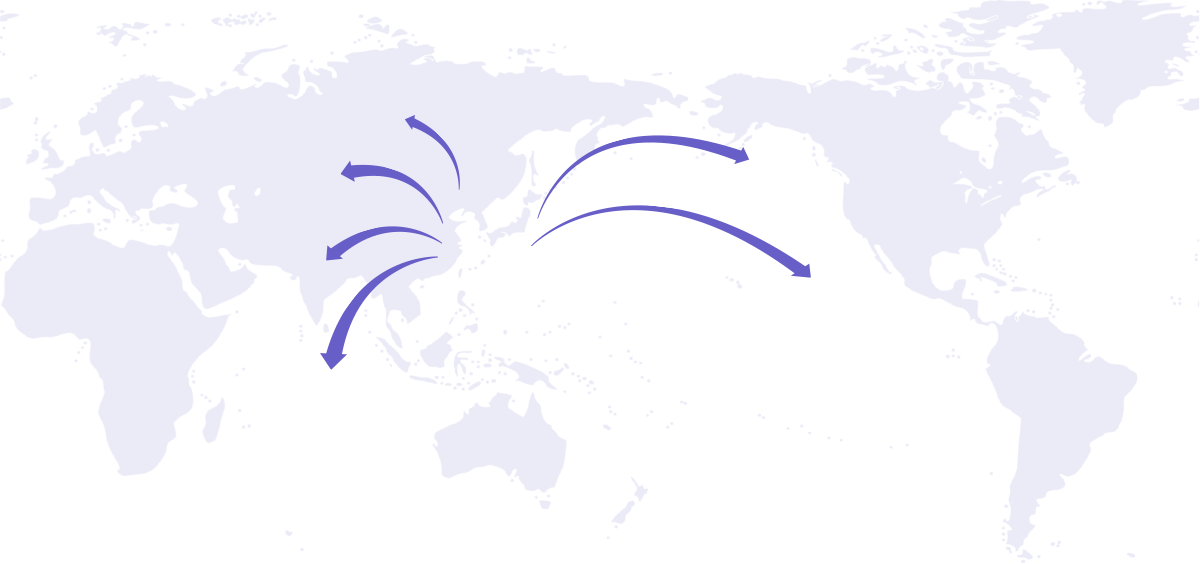

International Liasion Center
The International Liaison Center is a dedicated research space where international scientists and partner institutions collaborate directly on-site at KAIST’s Meta- Convergence Building I (W13, 2nd floor).
It serves as an international co-research laboratory that enables visiting researchers from overseas institutions to conduct joint projects alongside KAIST faculty.
Through this close partnership model, KAIST promotes world-class innovation in synthetic biology and biofoundry research.


-
-
Korea–U.S. Collaboration
In 2024, KAIST, in partnership with the Korea Research Institute of Bioscience and Biotechnology (KRIBB) , successfully secured funding under the Korea-US Collaborative Research Project.
This initiative connects KAIST with North America’s leading synthetic biology institutions — Harvard University, MIT, UC Berkeley, and Stanford University — to conduct joint research and foster strategic international collaboration in Engineering Biology.
-
-
Global Biofoundry Collaboration
Under the Global Capacity-Building Program for Advanced Biotechnology, KAIST and the University of Illinois Urbana-Champaign (UIUC) jointly lead the establishment of a Global Biofoundry Center.
The network spans five countries and seven biofoundries, serving as a global platform for open innovation, large-scale automation, and shared R&D in bio-manufacturing and synthetic biology.
-
-
Korea–U.K. Collaboration
Building on the successful Focal Point Program (2013–2017) with Imperial College London and the London Biofoundry, KAIST signed a new MOU in 2024 to launch the Korea–U.K. Global Research Center for Advanced Biotechnology.
This center strengthens joint research in synthetic biology, biomanufacturing, and responsible innovation between the two countries.
-
-
Korea–Denmark Collaboration
KAIST has maintained a partnership with Denmark for over 13 years.
In 2024, the two countries established the Korea–EU Global Research Center for Advanced Biotechnology, expanding joint projects in synthetic biology, cell factory engineering, and sustainable bioprocessing.
-
-
Korea–Germany Collaboration
KAIST and Merck have established the KAIST–Merck Research Center, focusing on joint research programs, data-driven technology development, and workforce training for bioindustry innovation.
The collaboration includes student internships, scholarships, and research exchange programs, enabling practical skill development and fostering next-generation experts in Engineering Biology.
-
-
Korea–Asia Collaboration
KAIST co-founded the Asian Synthetic Biology Association (ASBA) in partnership with over 120 experts from six Asian countries (including Korea, Singapore, Japan, and China).
KAIST hosted the ASBA conferences in 2018 and 2025, positioning itself as the regional hub for synthetic biology collaboration and academic leadership in Asia.
Major International Partners and Researchers
The KAIST Graduate School of Engineering Biology actively strengthens its global research infrastructure through strategic MOUs and collaborations with leading international institutions in synthetic biology and advanced biotechnology.
These partnerships promote joint research, knowledge exchange, and technology transfer across the global Engineering Biology community.
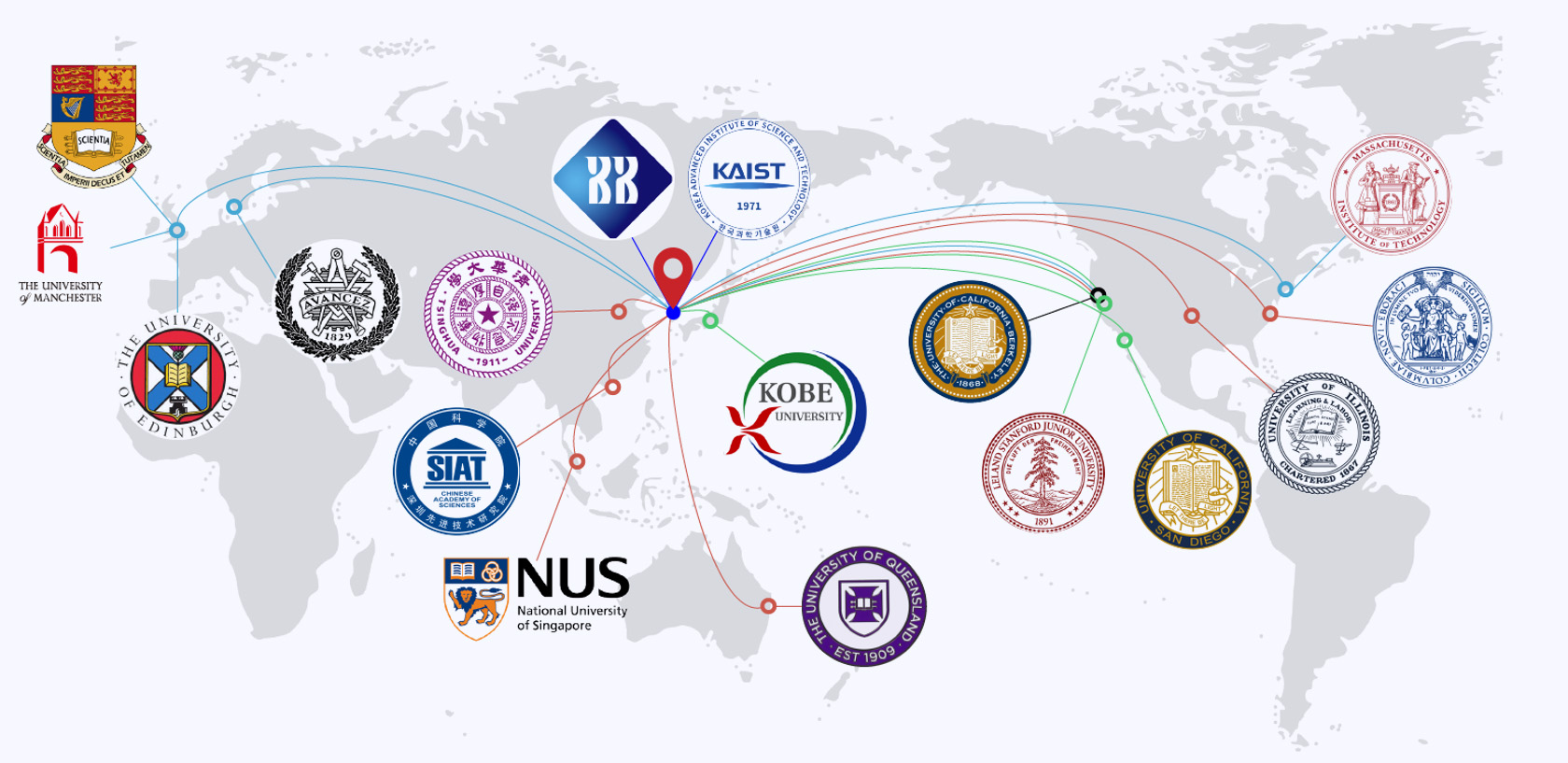
Academic Advisory Committee
-

Bernhard Palsson
(USA) UCSD
-

Jay Keasling
(USA) UC Berkeley
-

Jens Nielsen
(Sweden) Chalmers Univ.
-

James Collins
(USA) MIT
-

David Baker
(USA) Univ. Washington
-

Paul Freemont
(U.K.) Imperial College London
-

Markus Convert
(USA) Stanford Univ.
-

Chenli Liu
(China) SIAT
-

Matthew Chang
(Singapore) National Univ. Singapore
